Story

College presidents on antisemitism, by Annie Ma
Over five hours at a con- gressional hearing, lawmakers pressed the presidents of Harvard, the University of Pennsylvania and MIT on the topic of anti- semitism. In some instances, they were unable to say whether calls for the genocide of Jews would violate their schools’ conduct policies. The backlash started almost immediately. Penn’s leader stepped down within days. Har- vard’s presi- dent was on the hot seat for nearly a week before a university gov- erning board announced she would stay on the job. R e p u b l i - cans and Dem- ocrats alike criticized responses the presidents gave at the Dec. 5 hearing of a U.S. House committee on antisemitism on college campuses. In particular, the uproar centered on a line of questioning from Rep. Elise Stefanik, R-N.Y., who repeatedly asked how each university’s code of conduct would handle calls for the genocide of Jews. Early in the questioning, Rep. Stefanik asked the presi- dents about chants for “intifada,” an Arabic word for “uprising” or “resistance.” Rep. Stefanik equated calls for an intifada as a call for a global Jewish genocide. Here is a look at the testimony given by Claudine Gay, of Har- vard, Liz Magill of Penn, and Sally Kornbluth of MIT. Liz Magill of PENN During the hearing, Rep. Ste- fanik asked Ms. Magill, “Does calling for the genocide of Jews violate Penn’s rules or code of conduct? Yes or no?” Ms. Magill repeatedly de- clined to give a yes or no answer. She emphasized the university’s policies considered whether “speech turns into conduct,” in which case it would be consid- ered harassment. Rep. Stefanik continued to demand a definitive answer. Ms. Magill responded that if speech were “directed and severe, pervasive, it is harassment,” and that whether a student would be punished is “a context-dependent decision.” That answer became a flash- point of the criticism of Ms. Magill. The day after the hearing, Ms. Magill said in a video statement released by the university that a call for the genocide of Jewish people would be considered harassment or intimidation. Still, Penn alumni and donors increased pressure on the board for Ms. Magill to resign, a cam- paign that dated to earlier in the fall, when the university allowed a Palestinian literary festival to take place on campus despite allegations that some speakers had shown antisemitism in other comments. Amid growing pressure from donors who said they would pull money from the university, Ms. Magill and board chairman Scott Bok resigned. Claudine Gay of Harvard Dr. Gay, the first Black woman president of the 400-year-old university, also was asked by Rep. Stefanik whether similar speech would violate Harvard’s policies. She gave a similar response to Ms. Magill, emphasizing that context and whether the speech turned into conduct would factor into any disciplinary decisions. “Antisemitic rhetoric, when it crosses into conduct, that amounts to bullying, harassment, intimidation. That is actionable conduct, and we do take action,” Dr. Gay said. “So the answer is yes. That calling for the genocide of Jews violates Harvard’s Code of Con- duct. Correct?” Rep. Stefanik asked. Dr. Gay reiterated that it depended on the context. “It does not does not depend on the context,” Rep. Stefanik responded. “The answer is yes, and this is why you should resign.” A day after the hearing, Dr. Gay condemned calls for violence against Jewish students in a state- ment posted by the university to X, formerly Twitter. Sally Kornbluth of MIT Dr. Kornbluth also was ques- tioned by Rep. Stefanik about policies at the Massachusetts Institute of Technology. She responded by saying speech targeted at individuals, not public statements, would be considered a violation of bullying and harass- ment policies. Rep. Stefanik then asked, “Yes or no: Calling for the genocide of Jews does not constitute bullying and harassment?” Dr. Kornbluth responded that she had not “heard calling for the genocide of Jews on our campus.” Rep. Stefanik then asked Dr. Kornbluth whether she had heard demonstrators calling for an intifada. Palestinians have launched two intifadas against Israel — one in the late 1980s and one in the early 2000s. Both were to protest Israeli occupation of the West Bank and the Gaza Strip, and both involved violence. But since Hamas’ massacre in Israel in October, some Jews have interpreted calls for globalizing the intifada as a call for broader attacks against Jews. “I’ve heard chants which can be antisemitic, depending on the context when calling for the elimination of the Jewish people,” Rep. Kornbluth said. Speech would be investigated as harassment if it were “pervasive and severe,” she said. In a written note to the MIT community two days after the hearing, the chair of the MIT Corporation signaled the execu- tive committee’s support for Rep. Kornbluth, who is Jewish. “She has done excellent work in lead- ing our community, including in addressing antisemitism, Islamo- phobia, and other forms of hate, all of which we reject utterly at MIT,” the statement said. The writer covers education, race and ethnicity for the Associ-
Story

‘Silence is violence’
Pastor and author Dr. Brenda Salter McNeil talks about racial justice and faith
Dr. Brenda Salter McNeil has been on stages, in classrooms and pulpits, preaching for decades about bridging racial divides. In her new book, “Becoming Brave — Finding the Courage to Pursue Racial Justice Now,” the associate professor of reconciliation at Seattle Pacific University said there is no more time to wait.
Story

Dick Gregory: What is seen and unseen
The celebration of the life of Dick Gregory on Sept. 16 at the City of Praise Family Ministries in Landover, Md., was more than seven hours of eclectic diversity, from a serenade by Native Americans to a musical tribute by Ayanna Gregory, Mr. Gregory’s daughter, and Stevie Wonder, to speakers MSNBC’s Lawrence O’ Donnell and Washington Mayor Muriel Bowser, to the fiery Rep. Maxine Waters, who vowed to help impeach that “thing” in the White House.
Story

Faith helped police sergeant through childhood trauma
Richmond Police Sgt. Carol Adams says not a day goes by that she doesn’t have flashbacks of her father viciously beating her mother.
Story

The business of being Black never ends
August is Black Business Month, and it’s safe to say that most Black business owners agree that running a business is a 12-month marathon.
Story

Ukraine invasion, Tulsa Massacre from same playbook, by David W. Marshall
Looking at the events unfolding in Ukraine, it is not hard to compare them to what occurred during Nazi Germany’s invasion of Poland in 1939, especially when you see how two dictators — Adolf Hitler and Vladimir Putin—followed the same playbook.
Story

Closing of area shelters leave many without shelter
Joe Barrett is back to living on the street. Left paralyzed on his left side by a stroke, the 62-year-old Richmond native is among more than 130 homeless people who lost their shelter beds Saturday.
Story

Review: A different kind of underdog story in ‘Air’
The new movie “Air” is technically about a shoe. There is nothing especially extraordinary about this shoe. As the Q-like Nike designer Peter Moore (Matthew Maher) explains, the last significant change to footwear was made some 600 years ago when the decision was made to differentiate the right and left feet. The Air Jordan is, at the end of the day, just another shoe.
Story

Passion, purpose drive Diversity Richmond’s new CEO
When Diversity Richmond, parent of the city’s popular Diversity Thrift, was searching for a new executive director, the Rev. Lacette Cross wasn’t sure about throwing her hat in the ring. But, being “a good Baptist,” she looked to a higher power for answers. She also got some nudging from friends and colleagues. In the end, she decided to apply.
Story

Pharrell’s cousin shot and killed by Virginia Beach Police
Virginia Beach native and Grammy Award-winning musician Pharrell Williams said Monday night that his cousin, Donovon Lynch, 25, was killed by police during a chaotic night of violence in the oceanfront city last Friday.
Story

Story

Governor ‘bans the box’ for state job applications
A small change that Gov. Terry McAuliffe just made in the state’s job application form could have a big impact on thousands of job seekers like Genevieve Carter of Richmond. As a result of the governor’s executive order, Ms. Carter no longer will have to disclose she has been convicted of a crime in filling out an application for a state position.
Story

Vision to return Gilpin Court to beacon of black enterprise
The decrepit four-story building at 900 St. James St. has been vacant for decades. However, plans are afoot to transform this former beacon of black enterprise into a centerpiece of new development in Gilpin Court, an underserved, untapped section of the city that lies just north of Downtown, split off by the interstate highways that carve their way through the city.
Story

A clash of freedoms in Indiana
Neither side in the uproar over Indiana’s “religious freedom restoration” law has been totally candid about its benefits or its dangers. That often happens in politics, an arena in which it often seems that no statement is too good to be overstated. For example, defenders of the controversial Religious Freedom Restoration Act, which Indiana Gov. Mike Pence signed last week, are technically correct when they say the law is not a “license to discriminate” against gays and lesbians as critics claim.
Story

‘Checkered past’ tanks Petersburg’s top pick
Petersburg Mayor W. Howard Myers expected to introduce Rochelle Small-Toney as the new city manager Wednesday evening
Story

‘Richmond 34’ student sit-in commemorated with state marker
Elizabeth Johnson Rice was among 34 Virginia Union University students who were arrested after they staged a sit-in at Thalhimers department store in 1960 for its refusal to serve African-Americans in its restaurants.
Story

Prince autopsy report hints at puzzling painkiller mystery
The report from the medical examiner who conducted Prince’s autopsy is tantalizing for what it doesn’t say. The single-page document released last week lists a fentanyl overdose as the cause of death, but it offers few clues to indicate whether the musician was a chronic pain patient desperately seeking relief, a longtime opioid user whose habit became an addiction or a combination of both.
Story

City Council calls for Washington team to pay its way or end relationship
Will Washington’s pro football team continue to run a summer training camp in Richmond after 2020? That question is expected to be decided after Mayor Levar M. Stoney and team representatives hold talks, likely in May, on a potential extension of the current agreement.
Story

Star Barbershop winning games at a steady clip
Star Barbershop is winning softball games at a steady clip in Chesterfield County.
Story
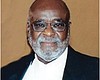
Thomas ‘T.C.’ Harrell, co-founder and former owner of Carolina Bar-B-Que, dies at 86
Thomas Christopher Harrell was the barbecue man of Church Hill for 44 years. Known to customers and friends as “T.C.,” the no-nonsense, though kindly Army veteran served up his own creations and family recipes for tangy, vinegar-based pork barbecue, ribs, cole slaw and greens at Carolina Bar-B-Que, the restaurant he started with his brother, Paul, in 1970 at 3015 Nine Mile Road near the Creighton Court public housing community in the East End.